-
android app development
Android App Development Company: A Complete Guide to Building Custom Android Apps
August 7, 2026 — By Brain Technosys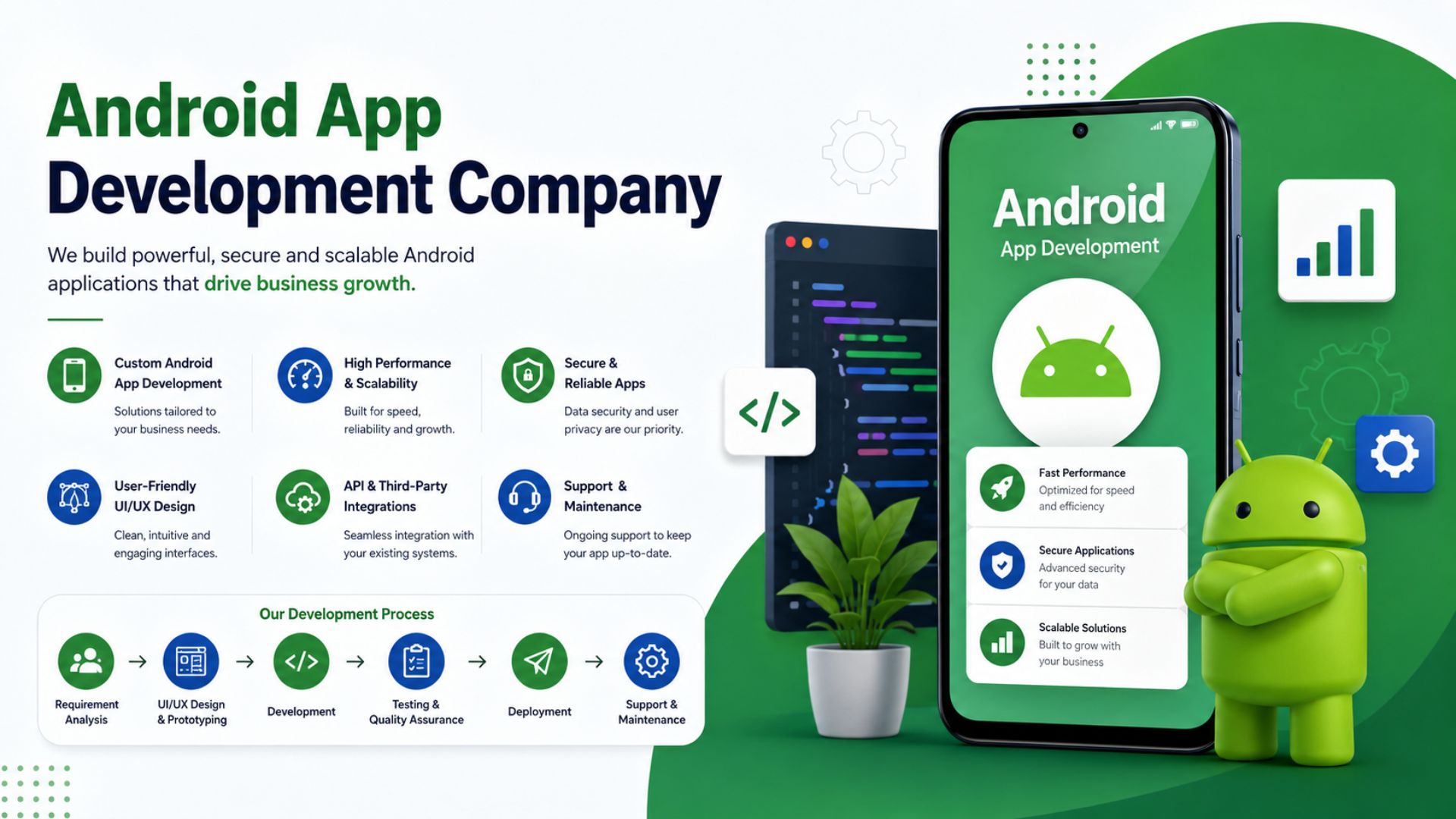
Let’s be honest about something: most companies don’t fail at building an Android app because they picked the wrong framework. They fail because nobody sat down early enough and asked the boring questions. Who is this really for? What problem does it actually solve? What happens when 50,000 people use it instead of 500? Code is the easy part. The strategy behind it is where things usually go sideways.
That’s the part a good Android app development company earns its keep on. Anyone can write a login screen. The value comes from turning a rough idea into something secure, fast, and built to grow with you, not against you. Whether you’re a two-person startup shipping your first product, an established business finally moving operations onto mobile, or a brand trying to get closer to your customers, custom Android app development gives you room to build exactly what you need instead of forcing your business to fit someone else’s template.
In this guide I’ll walk through the whole picture, what these companies actually do, why Android makes sense for most businesses, the types of apps you can build, the development process step by step, the features that separate a good app from a forgettable one, and how to pick a partner you won’t regret hiring six months in. At Brain Technosys we’ve been through this cycle enough times to know where the real risks hide, and I’ll point those out along the way.
What Is an Android App Development Company?
Strip away the jargon and it’s simple: an Android app development company helps you design, build, test, launch, and keep an Android application running. That last part, “keep it running,” trips up a lot of businesses who think launch day is the finish line. It isn’t. It’s closer to the starting line.
These companies work with everyone from first-time founders to large enterprises, building custom Android app development solutions that actually move the needle, better customer experience, smoother internal operations, and a platform that supports growth instead of holding it back.
What Does an Android App Development Company Do?
A real development partner owns the full journey, not just the coding sprint in the middle. That means business analysis up front, UI/UX design, the actual development, thorough testing, getting the app live on the Google Play Store, and then sticking around for maintenance. Along the way, experienced Android developers wire up APIs, tune performance so the app doesn’t crawl, and lock down security so your users’ data stays their data.
Why Businesses Prefer Custom Android App Development
Off-the-shelf apps are cheap for a reason, they’re built for nobody in particular, which means they fit nobody particularly well. Custom Android app development flips that. You get software shaped around how your business actually works: tighter security, features that match your real workflows, clean integration with the systems you already use, and the headroom to scale when things take off. You’re not paying to bend your process around the software. The software bends around you.
Why Android Is the Preferred Platform for Businesses
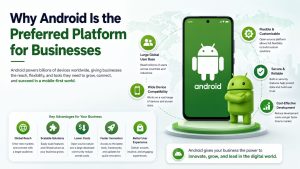
Android is the most widely used mobile operating system on the planet, and that single fact changes the math for most businesses. When you want to reach a lot of people without gatekeeping who can afford the hardware, Android is where they are. Its flexibility, affordability, and support across a huge range of devices make it a sensible bet whether you’re a scrappy startup or a large enterprise. Partner with the right Android app development company and you end up with something secure, scalable, and aligned with where you want to be in three years, not just next quarter.
Large Global User Base
Android runs on billions of phones worldwide. That’s not a vanity statistic, it’s your addressable market. Whether you’re targeting your own city or customers across continents, an Android app puts you in front of a genuinely diverse audience and gives you real room to grow engagement.
Flexible and Scalable App Development
Here’s what I love about building on Android: you’re rarely painted into a corner. Custom Android app development lets you start with exactly the features you need today and bolt on new functionality as the business demands it. No expensive rebuilds, no “well, the platform won’t let us.” That flexibility is why Android holds up so well for long-term digital transformation.
Cost-Effective Business Solutions
Android also happens to be one of the more economical ways to build serious mobile software across industries. With experienced Android developers on the job, you can ship feature-rich Android mobile app solutions without quietly sacrificing performance, security, or the quality of the user experience to hit a number. Value and quality aren’t opposites here if the team knows what it’s doing.
Types of Android Apps Businesses Can Build
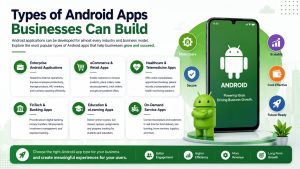
Almost every industry can put an Android app to good use, the trick is matching the app to a real goal rather than building something because a competitor did. Below are the categories we see most often, but treat them as starting points, not boxes you have to fit inside.
Enterprise Android Applications
Enterprise Android apps are the quiet workhorses, they run internal operations most customers never see. HR processes, employee communication, project management, inventory tracking, reporting: all of it gets faster and cleaner on a well-built app. Because this software often touches sensitive company data, security here isn’t optional. A capable Android app development company builds enterprise apps that boost productivity without opening doors you’d rather keep shut.
eCommerce and Retail Apps
Shopping moved to phones years ago and never looked back. A good retail app lets customers browse, pay securely, track orders, and get offers that feel personal instead of spammy. Done right, it lifts both engagement and sales, because the easier you make buying, the more people buy.
Healthcare and Telemedicine Apps
Healthcare providers lean on Android apps for online consultations, appointment booking, patient records, prescription tracking, and health monitoring. The payoff is real: better access to care and far less friction between patients and the people treating them.
FinTech and Banking Apps
Banks and financial companies use Android apps for online banking, transfers, bill payments, investing, and expense tracking. This is a category where trust is the whole product, one clumsy security lapse and users are gone. Rock-solid security paired with a genuinely smooth experience is the bar, and it’s a high one.
Education and eLearning Apps
Schools and training companies use Android apps to deliver courses, live classes, quizzes, assignments, and progress tracking. The real win is flexibility: a learner can pick up where they left off from anywhere, which is exactly how modern learning tends to work.
On-Demand Service Apps
Food delivery, taxi booking, home services, logistics, these live and die on real-time coordination. On-demand Android apps handle bookings, payments, notifications, and live tracking so the customer gets speed and convenience while the business keeps everything organized behind the scenes.
Custom Android App Development Process
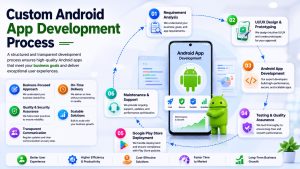
I’ll say it again because it matters: a good Android app development process is what separates a product that lasts from one that limps along. A structured approach keeps the app tied to actual business goals, keeps the experience smooth, and keeps things from falling apart after launch. Here’s how the Android application development cycle generally runs at Brain Technosys.
Business Requirement Analysis
Everything starts here, and skipping it is the most expensive mistake you can make. We dig into your goals, your audience, the features that actually matter, and the challenges standing in the way. The point is to build something that solves a real problem, not to pile on features nobody asked for.
UI/UX Design and Prototyping
With requirements clear, designers build wireframes and Android UI/UX layouts focused on being genuinely easy to use. The prototype stage is your cheap insurance, you get to walk through the app’s layout and flow before a line of production code exists, which is exactly when changes cost almost nothing to make.
Android App Development
Once the design gets a thumbs-up, Android developers start building for real, using modern tools and clean coding standards. Features, APIs, databases, and business logic all come together into a secure, high-performing Android application. This is where Kotlin app development and Java Android development do the heavy lifting.
Testing and Quality Assurance
Before anything ships, the app gets tested across different Android devices and screen sizes, because “works on my phone” means nothing. Android app testing surfaces bugs, sharpens performance, hardens security, and confirms the experience holds up in the messy real world of cross-device compatibility.
Google Play Store Deployment
After testing clears, we prep the app for Google Play Store app development and release, final optimization, policy compliance, and publishing. This is also where a lot of first-timers hit surprise delays, which is exactly why compliance gets handled deliberately, not as an afterthought.
Maintenance and Support
Launch is the beginning of the real relationship. Ongoing Android app maintenance, regular updates, security fixes, bug patches, and new features keeps the app reliable and compatible as Android itself keeps evolving. Neglect this stage and even a great app slowly rots.
Key Features of a Successful Android Application
A good-looking app that’s slow, insecure, or confusing is just a pretty failure. The features below are what actually keep users around.
User-Friendly Interface
If people have to think about how to use your app, you’ve already lost some of them. Clear menus, quick loading, and obvious features keep users engaged instead of frustrated. Simplicity is deceptively hard, and it’s worth the effort.
High Performance and Security
Users want speed and they want their data safe, and they’ll punish you for failing at either. Fast performance, secure authentication, data encryption, and regular Android app security updates aren’t extras, they’re the baseline for anything handling real information.
Offline Functionality
Connections drop. A well-built app lets people keep using key features offline and quietly syncs everything once they’re back online. Handled properly, the user barely notices the gap, which is the whole point.
API and Third-Party Integrations
Modern business apps rarely stand alone. They plug into payment gateways, CRMs, cloud storage, maps, and analytics. Good integrations expand what your app can do and automate the tedious stuff nobody wants to handle manually.
Scalability for Future Growth
Your needs will change, that’s not a maybe. Building scalable Android applications from the start means adding features, supporting more users, and folding in new technology later without tearing things down and starting over. It’s cheaper to plan for growth than to retrofit it.
Benefits of Hiring a Professional Android App Development Company
Bringing in a professional team gives you expertise, a proven process, and support that outlasts the launch. Instead of wrestling with technical problems in-house, you stay focused on running your business while people who do this every day handle the build.
Experienced Android Developers
Seasoned Android developers have shipped apps across plenty of industries, so they’ve already made, and learned from, the mistakes you’d otherwise make on your dime. They follow best practices and use current tech to build apps that are secure, scalable, and maintainable.
Faster Development with Modern Technologies
A structured process cuts down on delays and lifts quality at the same time. With the latest Android app development technologies and frameworks, a good team ships faster without cutting the corners that come back to haunt you.
Ongoing Support and Updates
An app needs care after launch, full stop. Professional companies provide updates, bug fixes, security improvements, and compatibility work so your app keeps running smoothly as new Android versions roll out.
Custom Solutions for Business Growth
Every business runs differently. Custom mobile app development means your app fits your actual workflows, connects to the systems you already rely on, and scales as new needs show up, delivering more value the longer you use it.
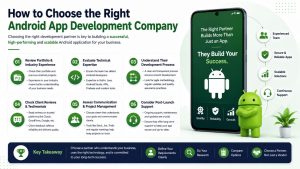
How to Choose the Right Android App Development Company
This decision matters more than most people realize, and it’s about more than a slick portfolio. You want a partner who understands your goals, communicates like a human, and stays reliable from kickoff through the long haul.
Review Portfolio and Industry Experience
Start with their past work. What kinds of Android applications have they actually built? Experience in your industry is a real plus, a team that already gets your challenges and your users spends less time learning on your budget.
Evaluate Technical Expertise
A solid mobile application development company should have developers fluent in Kotlin, Java, Android Studio, APIs, and cloud integrations. Strong technical depth is what makes native Android app development secure, scalable, and current rather than held together with duct tape.
Check Communication and Development Process
Clear communication quietly decides whether projects succeed or drift. Ask how they handle requirements, updates, testing, and feedback. A transparent process heads off the misunderstandings that derail timelines.
Consider Post-Launch Support
The right partner doesn’t vanish after launch. Look for one that offers ongoing maintenance, security updates, performance tuning, and real technical support to keep your app dependable as you grow.
Common Challenges in Android App Development
Knowing the hard parts ahead of time is half the battle, it lets you plan instead of scramble.
Device Fragmentation
Android runs on thousands of devices with wildly different screens, hardware, and OS versions. Making an app behave consistently everywhere takes deliberate testing and optimization, it doesn’t happen by accident.
Performance Optimization
People bail on slow apps and leave bad reviews on the way out. Tuning speed, memory, and battery use isn’t glamorous work, but it’s often the difference between an app people keep and one they delete.
Security and Data Protection
Protecting user information has to be a priority from day one. Secure authentication, encryption, regular updates, and compliance with industry standards are what keep sensitive data safe and users trusting you.
Google Play Store Compliance
Before an app goes live, it has to meet Google Play’s policies and technical requirements. Following the guidelines up front avoids review delays and keeps your app available once it’s out.
Frequently Asked Questions
What does an Android app development company do?
It designs, develops, tests, deploys, and maintains Android applications built around your specific business requirements, from the first planning conversation to long after launch.Why choose custom Android app development?
Because it gives you features built for your workflow, stronger security, clean integrations, and the flexibility to scale, none of which off-the-shelf software can match.How long does Android app development take?
It depends on complexity, features, design, integrations, and testing. A simple app might take a few months; enterprise Android apps usually need considerably more time.What technologies are used for Android app development?
Common choices include Kotlin, Java, Android Studio, Jetpack libraries, Firebase, REST APIs, and cloud services.How much does Android app development cost?
It varies with scope, features, UI/UX design, integrations, security needs, and ongoing maintenance, which is why any honest estimate starts with a real conversation about your goals.Final Thoughts
At the end of the day, picking the right Android app development company comes down to finding a technology partner who actually gets what you’re trying to achieve, and builds for the long game, not just launch day. With custom Android app development, you can create secure, scalable, user-friendly apps that make customers happier and operations smoother. Work with experienced Android developers and you get more than something that meets today’s needs, you get a foundation that supports tomorrow’s growth too.
If you’re weighing an Android project and want a straight conversation about what it’ll actually take, that’s exactly the kind of work we do at Brain Technosys. No jargon, no overselling, just a clear plan built around your business.
Recent Posts
-
Benefits of AI for Businesses: How Artificial Intelligence Drives Growth
September 24, 2026
-

What Is AI Software Development? A Complete Guide for Businesses
September 11, 2026
-

Benefits of Custom Software Development for Modern Businesses
September 2, 2026
-
Hire the Best Angular Developers - Brain Technosys
August 21, 2026
-
Categories
- .NET development
- Agile Project Management
- AI development
- android app development
- Angular Developer
- Apps Development
- Bing Webmasters
- Blog Marketing
- Cloud Services
- Custom Software Development
- Digital Marketing
- E-Commerce
- Flutter App Development
- Google Adwords
- google map
- Google Update
- Google Webmasters
- Hire Developers
- HTML
- internet marketing
- Ios App Development
- iphone app development
- Local SEO
- magento development
- MEAN vs MERN Stack Development
- mobile app development
- Mobile Update
- News & Events
- PPC
- Search Engine Optimization
- Seo
- Social Media Marketing
- Tech
- Uncategorized
- Web Design
- Web Development
- Web Hosting
- WooCommerce Development


